
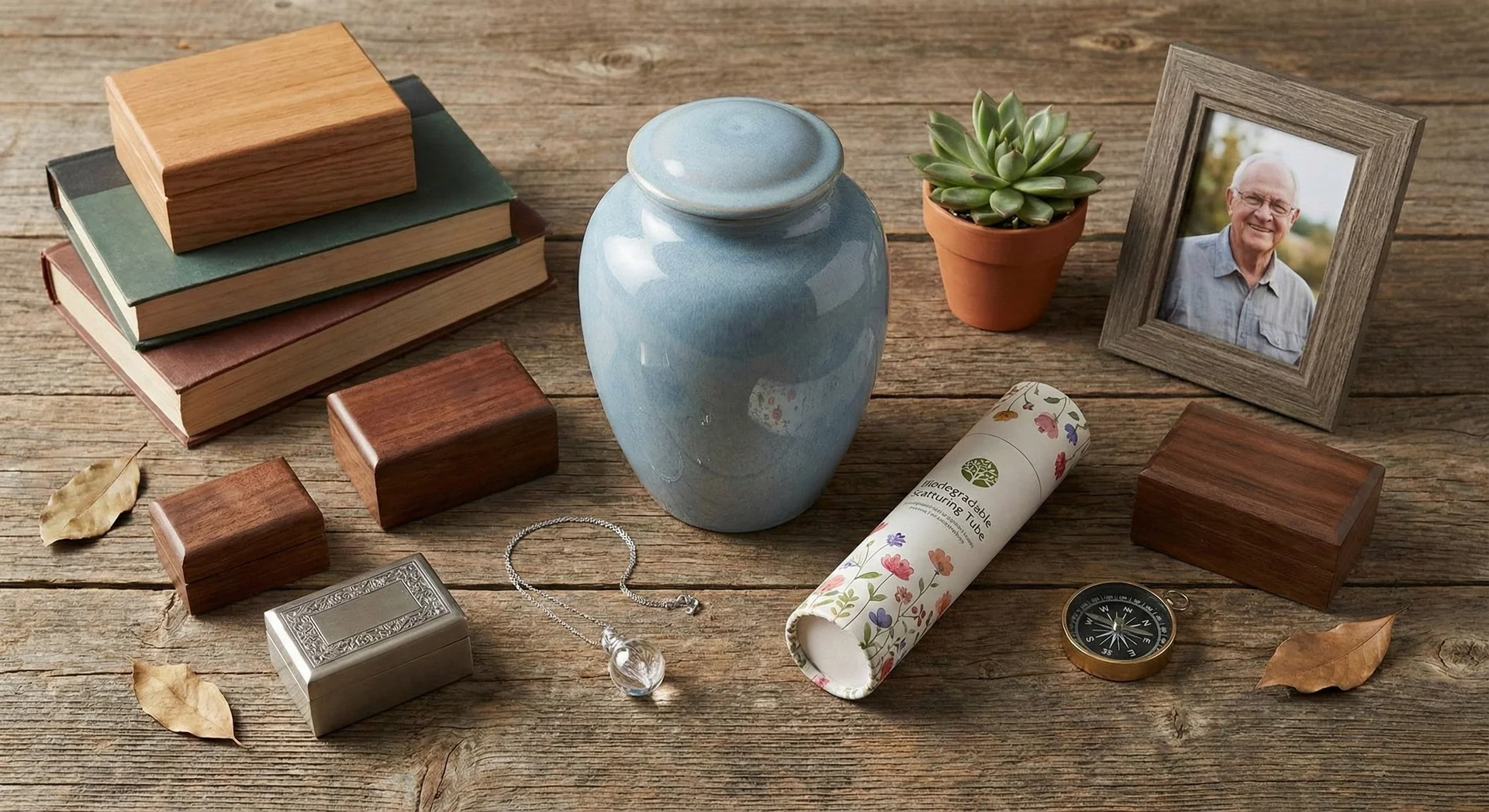
When relatives live in different homes, the question of where to keep a loved one’s cremated remains can become more complicated than choosing a single urn. Some people want a small portion nearby. Others prefer the remains to stay together, or would rather receive a photograph or personal belonging. A workable arrangement begins by hearing those preferences before buying containers or making promises about distribution.
Keepsake planning involves consent, practical coordination, and a clear record of what the family decides. It does not require every relative to make the same choice. The following approach helps families discuss the options, work with their funeral provider, and create a plan that can still be understood years later, when memories of the original conversation may be less precise.
Start with the wishes already expressed
Begin by looking for any instructions the person left about their cremated remains. These may be part of arrangements made with a funeral provider or a conversation documented by the family. Separate an explicit instruction from someone’s recollection of a passing comment. If the meaning is unclear, identify that uncertainty rather than treating an assumption as a settled decision.
The funeral provider can help explain who is authorized to make decisions and what documentation is required in the relevant jurisdiction. Family agreement is valuable, but it should not be mistaken for legal authority. Ask the provider about its procedures before requesting a division or transfer. This is especially important when several relatives are involved or when arrangements cross state or national borders.
If the family follows a religious or cultural tradition, discuss whether dividing or keeping the remains is consistent with that tradition. Different families apply customs differently, so broad internet summaries may not resolve the question. A trusted religious leader can clarify the practice the family wants to follow. Establishing these boundaries early prevents a later product choice from becoming a disagreement about beliefs.
Explain the available arrangements clearly
CANA describes keepsake urns as containers for a portion of cremated remains. That makes them different from an urn intended to hold all the remains of one person. The term “keepsake” also appears on jewelry and memorial objects that may or may not contain remains, so confirm the purpose of the specific product rather than assuming every keepsake works the same way.
One possible arrangement is a main urn with a small keepsake for each interested relative. Another is a cemetery placement with a limited portion retained, when permitted and consistent with the chosen wishes. Some families decide against any division and share non-container mementos instead. Lay out the realistic options in plain language before asking people to express a preference.
Urns can serve different roles within the same family plan, but the containers should follow the agreed arrangement. Decide what will be kept together, what may be shared, and where each portion is intended to go. Then compare the relevant sizes and designs. Buying a matching set too early can create pressure for relatives to accept something they did not request.
Ask privately before creating a group order
A group conversation is useful for the overall plan, but individual preferences may be easier to express privately. Ask whether each person would like a keepsake without implying that accepting one is expected. Allow them to decline without explanation. People can care deeply about a loved one while feeling uncomfortable keeping cremated remains in their home.
Give relatives a reasonable time to consider the choice, and explain any real deadline. If a burial or scattering is already scheduled, the provider may need a decision before that event. Avoid inventing urgency simply to finish an order. A short written message describing the options and the response date can reduce misunderstandings, especially when family members are communicating across different time zones.
Keep the response process discreet. One coordinator can note who wants a keepsake and who prefers a different memento, without distributing everyone’s reasons. If a person is undecided, ask the provider what options remain available under the planned timeline. Do not promise that a portion can always be retrieved later after burial, scattering, or another permanent arrangement.
Match the portions to the containers
Once the plan is agreed, ask the provider how the portions and containers should be coordinated. Do not assume that dividing into a particular number of shares will automatically match the capacities of products already selected. Small keepsake vessels vary considerably, and jewelry chambers may be much smaller than tabletop containers. The provider should understand both the distribution plan and the exact products.
Collect the capacity, opening information, and closure instructions for each item. If relatives select different designs, organize those specifications in one list with the intended recipient beside each entry. This reduces the chance of sending the wrong container for filling. It also lets the provider identify an unsuitable opening or closure before the family’s chosen items are delivered.
Ask about the provider’s transfer service, scheduling, and any associated charges. Confirm how identification will be maintained and how the finished items will be returned. Families do not need to treat this as a task they must perform themselves. Professional assistance can be particularly useful when several very small vessels are involved or when handling the remains would be distressing to those arranging the keepsakes.
Let coordinated designs remain optional
Matching keepsakes can create a visual connection across different households. However, they are only one option. A shared symbol, color, or short inscription can connect different designs without requiring everyone to display the same object. One relative might prefer a small wooden container in a study, while another chooses a simpler metal piece for a cabinet.
Discuss whether the inscription should identify the person formally or use the name each recipient knew them by. A main urn may use a full name, while a keepsake could use a familiar family name if everyone understands the choice. Keep a separate record of the full identity regardless of the visible wording. Decorative personalization should not be the only information future relatives can rely on.
If a family photograph or personal symbol is used, confirm that the seller can reproduce it clearly at the selected size. An intricate illustration that looks good on a screen may be difficult to read on a small surface. Ask for a proof and choose one person to approve the final version after checking the relevant names, dates, and recipient details.
Agree on costs without comparing affection
Set a budget before asking relatives to select products. Explain whether the shared arrangements cover a basic keepsake, whether each person will purchase their own, or whether one person has offered to pay. A clear statement is easier than trying to interpret unspoken expectations after the order is placed. Include personalization, transfer, packaging, and delivery when discussing the total.
Avoid connecting the size or cost of a keepsake with the closeness of a relationship. A modest container may suit someone’s home and preferences better than an elaborate design. If relatives choose different price points, keep those choices private where possible. The goal is to provide an appropriate remembrance, not create a visible ranking of who spent more or received the largest portion.
For a shared order, circulate a concise confirmation before payment. List the chosen products, personalization text, quantities, and who has approved each item. Identify any unresolved details explicitly. This final check can prevent small errors from becoming emotionally difficult problems, particularly when personalized products have limited return options or the family is working toward a service date.
Plan the handover and future care
Ask each recipient how they want to receive the keepsake. Some may prefer a quiet handover after a family gathering; others may want it delivered privately at another time. Do not turn the distribution into a public ceremony without agreement. People should be able to decide whether they want to open packaging or discuss the item in front of others.
Include care instructions and clear identification with each keepsake. Keep the manufacturer’s packaging if it is useful for protection, and explain whether the closure is intended to remain sealed. If the item must be shipped or carried on a flight, verify the applicable requirements before arranging transport. A very small amount of cremated remains should not be assumed exempt from rules simply because the container resembles ordinary jewelry or a gift.
Discuss what should happen if a recipient can no longer keep the item. A relative may move into a setting with limited storage, change personal preferences, or want to return the keepsake. Naming a family contact gives them a practical path. This conversation can be brief and respectful; it is a plan for continuity, not a prediction that anyone will stop valuing the remembrance.
Preserve the story alongside the object
Create a short family record of the final arrangement. Note where the main urn or cemetery placement is located, which relatives received keepsakes, and where the provider’s documents are stored. Share the record only with the people who need it. Updating a simple record after a move is easier than reconstructing the arrangement from messages years later.
Consider including a separate memory with each keepsake: a copy of a photograph, a handwritten story, or the explanation behind a chosen symbol. These additions can convey something a container alone cannot. A future generation may recognize a name on an urn without knowing why a lighthouse or particular flower was selected. A few specific sentences can preserve that connection.
Sharing cremated remains works best when the family understands the wishes, respects individual choices, and assigns the practical tasks clearly. The products are one part of that process. Thoughtful consent, accurate identification, and a plan for care give each keepsake a place within a larger family remembrance while allowing relatives to participate in ways that suit them.
A Family Guide to Sharing Cremated Remains and Choosing Keepsakes
When relatives live in different homes, the question of where to keep a loved one’s cremated remains can become more complicated than choosing a single urn. Some people want a small portion nearby. Others prefer the remains to stay together, or would rather receive a photograph or personal belonging. A workable arrangement begins by hearing those preferences before buying containers or making promises about distribution.
Keepsake planning involves consent, practical coordination, and a clear record of what the family decides. It does not require every relative to make the same choice. The following approach helps families discuss the options, work with their funeral provider, and create a plan that can still be understood years later, when memories of the original conversation may be less precise.
Start with the wishes already expressed
Begin by looking for any instructions the person left about their cremated remains. These may be part of arrangements made with a funeral provider or a conversation documented by the family. Separate an explicit instruction from someone’s recollection of a passing comment. If the meaning is unclear, identify that uncertainty rather than treating an assumption as a settled decision.
The funeral provider can help explain who is authorized to make decisions and what documentation is required in the relevant jurisdiction. Family agreement is valuable, but it should not be mistaken for legal authority. Ask the provider about its procedures before requesting a division or transfer. This is especially important when several relatives are involved or when arrangements cross state or national borders.
If the family follows a religious or cultural tradition, discuss whether dividing or keeping the remains is consistent with that tradition. Different families apply customs differently, so broad internet summaries may not resolve the question. A trusted religious leader can clarify the practice the family wants to follow. Establishing these boundaries early prevents a later product choice from becoming a disagreement about beliefs.
Explain the available arrangements clearly
CANA describes keepsake urns as containers for a portion of cremated remains. That makes them different from an urn intended to hold all the remains of one person. The term “keepsake” also appears on jewelry and memorial objects that may or may not contain remains, so confirm the purpose of the specific product rather than assuming every keepsake works the same way.
One possible arrangement is a main urn with a small keepsake for each interested relative. Another is a cemetery placement with a limited portion retained, when permitted and consistent with the chosen wishes. Some families decide against any division and share non-container mementos instead. Lay out the realistic options in plain language before asking people to express a preference.
Urns can serve different roles within the same family plan, but the containers should follow the agreed arrangement. Decide what will be kept together, what may be shared, and where each portion is intended to go. Then compare the relevant sizes and designs. Buying a matching set too early can create pressure for relatives to accept something they did not request.
Ask privately before creating a group order
A group conversation is useful for the overall plan, but individual preferences may be easier to express privately. Ask whether each person would like a keepsake without implying that accepting one is expected. Allow them to decline without explanation. People can care deeply about a loved one while feeling uncomfortable keeping cremated remains in their home.
Give relatives a reasonable time to consider the choice, and explain any real deadline. If a burial or scattering is already scheduled, the provider may need a decision before that event. Avoid inventing urgency simply to finish an order. A short written message describing the options and the response date can reduce misunderstandings, especially when family members are communicating across different time zones.
Keep the response process discreet. One coordinator can note who wants a keepsake and who prefers a different memento, without distributing everyone’s reasons. If a person is undecided, ask the provider what options remain available under the planned timeline. Do not promise that a portion can always be retrieved later after burial, scattering, or another permanent arrangement.
Match the portions to the containers
Once the plan is agreed, ask the provider how the portions and containers should be coordinated. Do not assume that dividing into a particular number of shares will automatically match the capacities of products already selected. Small keepsake vessels vary considerably, and jewelry chambers may be much smaller than tabletop containers. The provider should understand both the distribution plan and the exact products.
Collect the capacity, opening information, and closure instructions for each item. If relatives select different designs, organize those specifications in one list with the intended recipient beside each entry. This reduces the chance of sending the wrong container for filling. It also lets the provider identify an unsuitable opening or closure before the family’s chosen items are delivered.
Ask about the provider’s transfer service, scheduling, and any associated charges. Confirm how identification will be maintained and how the finished items will be returned. Families do not need to treat this as a task they must perform themselves. Professional assistance can be particularly useful when several very small vessels are involved or when handling the remains would be distressing to those arranging the keepsakes.
Let coordinated designs remain optional
Matching keepsakes can create a visual connection across different households. However, they are only one option. A shared symbol, color, or short inscription can connect different designs without requiring everyone to display the same object. One relative might prefer a small wooden container in a study, while another chooses a simpler metal piece for a cabinet.
Discuss whether the inscription should identify the person formally or use the name each recipient knew them by. A main urn may use a full name, while a keepsake could use a familiar family name if everyone understands the choice. Keep a separate record of the full identity regardless of the visible wording. Decorative personalization should not be the only information future relatives can rely on.
If a family photograph or personal symbol is used, confirm that the seller can reproduce it clearly at the selected size. An intricate illustration that looks good on a screen may be difficult to read on a small surface. Ask for a proof and choose one person to approve the final version after checking the relevant names, dates, and recipient details.
Agree on costs without comparing affection
Set a budget before asking relatives to select products. Explain whether the shared arrangements cover a basic keepsake, whether each person will purchase their own, or whether one person has offered to pay. A clear statement is easier than trying to interpret unspoken expectations after the order is placed. Include personalization, transfer, packaging, and delivery when discussing the total.
Avoid connecting the size or cost of a keepsake with the closeness of a relationship. A modest container may suit someone’s home and preferences better than an elaborate design. If relatives choose different price points, keep those choices private where possible. The goal is to provide an appropriate remembrance, not create a visible ranking of who spent more or received the largest portion.
For a shared order, circulate a concise confirmation before payment. List the chosen products, personalization text, quantities, and who has approved each item. Identify any unresolved details explicitly. This final check can prevent small errors from becoming emotionally difficult problems, particularly when personalized products have limited return options or the family is working toward a service date.
Plan the handover and future care
Ask each recipient how they want to receive the keepsake. Some may prefer a quiet handover after a family gathering; others may want it delivered privately at another time. Do not turn the distribution into a public ceremony without agreement. People should be able to decide whether they want to open packaging or discuss the item in front of others.
Include care instructions and clear identification with each keepsake. Keep the manufacturer’s packaging if it is useful for protection, and explain whether the closure is intended to remain sealed. If the item must be shipped or carried on a flight, verify the applicable requirements before arranging transport. A very small amount of cremated remains should not be assumed exempt from rules simply because the container resembles ordinary jewelry or a gift.
Discuss what should happen if a recipient can no longer keep the item. A relative may move into a setting with limited storage, change personal preferences, or want to return the keepsake. Naming a family contact gives them a practical path. This conversation can be brief and respectful; it is a plan for continuity, not a prediction that anyone will stop valuing the remembrance.
Preserve the story alongside the object
Create a short family record of the final arrangement. Note where the main urn or cemetery placement is located, which relatives received keepsakes, and where the provider’s documents are stored. Share the record only with the people who need it. Updating a simple record after a move is easier than reconstructing the arrangement from messages years later.
Consider including a separate memory with each keepsake: a copy of a photograph, a handwritten story, or the explanation behind a chosen symbol. These additions can convey something a container alone cannot. A future generation may recognize a name on an urn without knowing why a lighthouse or particular flower was selected. A few specific sentences can preserve that connection.
Sharing cremated remains works best when the family understands the wishes, respects individual choices, and assigns the practical tasks clearly. The products are one part of that process. Thoughtful consent, accurate identification, and a plan for care give each keepsake a place within a larger family remembrance while allowing relatives to participate in ways that suit them.
Sources
Cremation Association of North America — Cremation Memorial Options
Cremation Association of North America — Cremation Process
Cremation Association of North America — Transport of Cremated Remains


